Capability Compounding
When learning becomes an accelerating advantage
Some organizations improve only when a major program forces change. Others become progressively better through the ordinary rhythm of work. Each project creates knowledge that improves the next project. Methods are refined, tools are reused and experienced people teach newer colleagues. What begins as a difficult capability gradually becomes faster, more reliable and more distinctive.
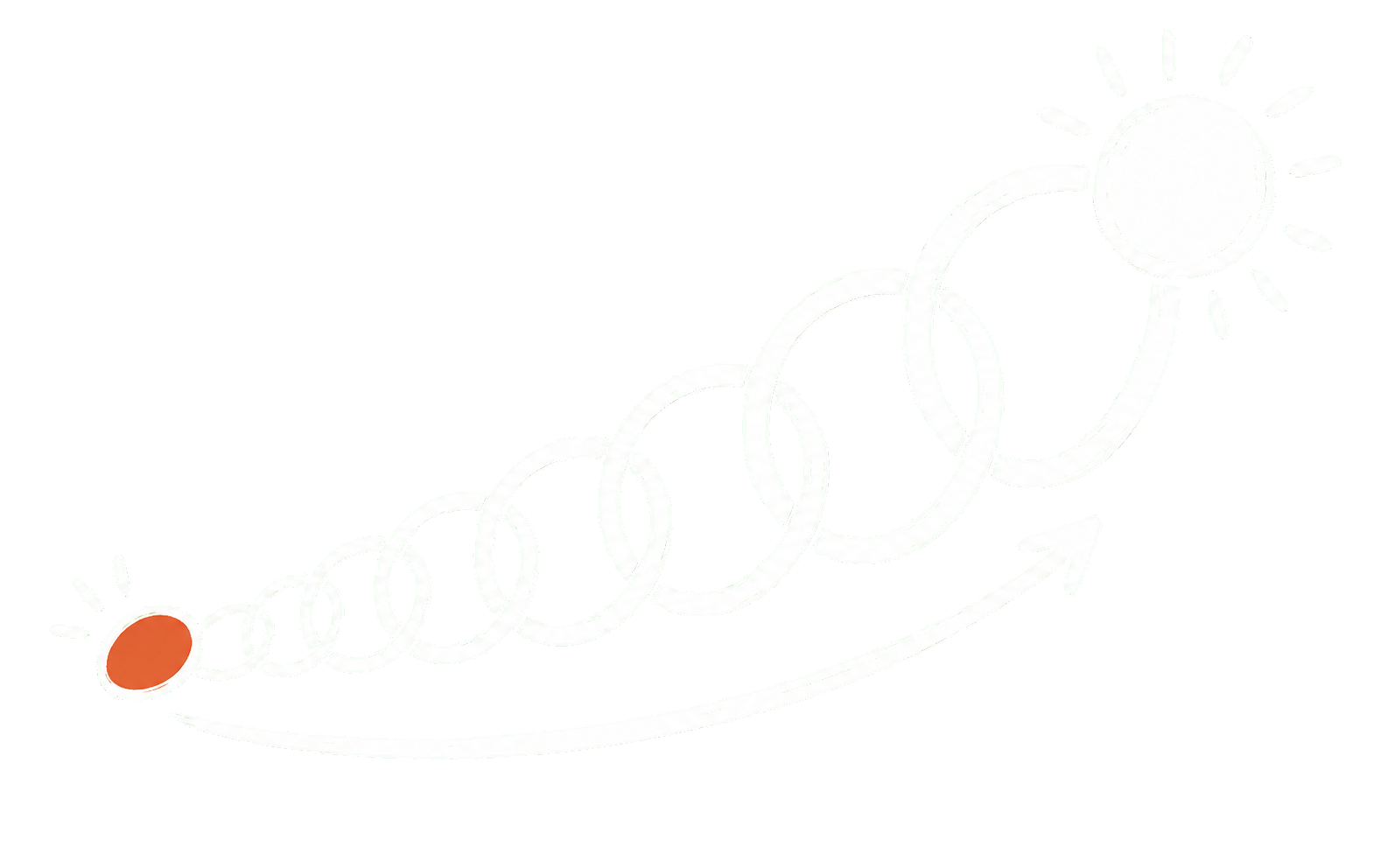
Capability Compounding is the accelerating advantage created when repeated investment, learning and reuse make an organization progressively better at a strategically important capability. The value does not come from repetition alone. It comes from capturing what is learned, embedding it in the operating system and applying it to increasingly valuable problems.
A capability compounds when today’s work improves both today’s result and the organization’s ability to produce better results tomorrow.
Where this principle sits
Capability Compounding belongs to the Creating Leverage family of principles. Focus Multiplier explains why concentrating resources on a small number of choices increases impact. Capability Compounding explains how sustained concentration can create an advantage that strengthens over time.
The principle differs from simple scale. Scale lowers unit costs by spreading fixed investment across greater volume. Compounding changes the organization itself: judgment improves, routines become more effective, data grows richer and complementary capabilities develop around the same strategic task. Competitors may copy an individual practice, but they cannot immediately reproduce years of accumulated learning.
The central question is: which capability would become increasingly valuable and difficult to imitate if the organization deliberately improved it through every cycle of work?
Most capability investment is treated as a one-off expense
Organizations often fund projects while neglecting the capability that produces them. A product launch is approved, but the customer insight, experimentation or commercial systems behind it are rebuilt from the beginning. A transformation delivers a result, but the methods and experienced team are dispersed. The next initiative therefore pays the same learning cost again.
This project-by-project approach creates activity without accumulation. Knowledge remains with individuals, lessons are documented but not embedded and tools are abandoned when sponsorship changes. Success depends on finding the same exceptional people or recreating temporary governance. The organization becomes experienced without becoming systematically more capable.
Compounding changes the return on investment. A reusable platform supports many products. A stronger pricing capability improves thousands of decisions. A disciplined acquisition system increases the value created from each future transaction. As the capability improves, it can address more complex opportunities, produce better evidence and attract stronger talent. The return from each cycle is partly reinvested in the next.
The strategic significance is durability. Products can be copied and market positions can shift, but an organization that learns faster and repeatedly converts learning into routines can adapt its advantage. Its edge lies not only in what it currently does, but in how reliably it becomes better at doing what matters.
Compounding is not automatically positive. Repetition can also reinforce obsolete assumptions, bureaucracy or poor practice. A capability deserves sustained investment only when it supports a clear strategic choice and remains responsive to evidence. The aim is disciplined evolution, not institutionalising a method simply because it is familiar.
How capabilities compound
Compounding occurs when experience is converted into assets that improve future performance. Several mechanisms reinforce one another.
Repeated practice deepens judgment
People become more capable when they encounter variations of the same important problem. They recognize patterns earlier, distinguish meaningful signals from noise and make better trade-offs. This tacit judgment is difficult to acquire through training alone; it develops through repeated application and reflection.
Learning is captured and codified
Experience compounds only when it survives the individuals and projects that created it. Playbooks, standards, data, software, decision rules and common language turn local insight into organizational memory. Codification should support judgment rather than replace it, making proven knowledge accessible while preserving room to adapt.
Tools and platforms are reused
A capability becomes more valuable when each cycle does not start from zero. Shared technology, research methods, supplier relationships or operating routines reduce the cost and time required for the next application. Reuse also produces consistency, which makes performance easier to compare and improve.
Feedback becomes faster and more precise
Clear measures show whether the capability is improving outcomes. Teams can compare approaches, diagnose variation and test changes. Better feedback accelerates learning; faster learning improves the system that generates the next round of evidence.
Talent develops around the system
People learn from experienced practitioners, rotate through relevant roles and receive coaching in a common method. The organization builds a pipeline rather than relying on a few experts. As the reputation of the capability grows, it attracts people who want to practice and improve it.
Adjacent capabilities connect
Over time, complementary skills develop around the core. Customer insight improves product decisions; product learning sharpens operations; operational data strengthens investment choices. The combined system becomes more valuable and harder to imitate than any individual routine.
These mechanisms create a reinforcing loop: application generates evidence; evidence improves the method; the improved method produces stronger results; and stronger results justify deeper application. Leaders sustain the loop by protecting continuity, rewarding contribution to the shared system and making improvement part of the work rather than an occasional initiative.
Danaher: turning an operating system into a repeatable advantage
Danaher demonstrates how a management capability can compound across businesses and over time. The Danaher Business System provides a shared approach to continuous improvement, customer focus, problem solving, performance management and leadership development. It is not simply a toolkit applied during a temporary efficiency program. It is the operating system through which the company manages and improves its portfolio.
Each application creates value in the immediate business, but it also strengthens Danaher’s ability to apply the system elsewhere. Leaders gain experience diagnosing operating problems. Common language allows practices to transfer between companies. Repeated use reveals which methods are robust and where adaptation is needed. Acquisitions provide new settings in which the capability can be exercised, while the capability improves the organization’s ability to integrate and develop future acquisitions.
This creates a different source of advantage from choosing one permanently superior market. Danaher can enter a business with valuable underlying characteristics and bring a mature improvement system to it. The result depends on accumulated routines, experienced leaders and an organizational culture that expects problems to be made visible and addressed systematically.
The case also shows why copying tools is insufficient. A competitor can adopt a workshop format, visual board or improvement vocabulary. It cannot instantly reproduce the leadership pipeline, practical judgment, coaching relationships and institutional memory produced by years of disciplined use. Capability Compounding resides in the connected system, not the visible artifacts.
For leaders, the practical lesson is to identify which methods should remain temporary and which should become part of the organization’s enduring way of working. If a capability is strategically important, every project should leave that system stronger than it found it.
Learning must be designed into the system
W. Edwards Deming provides a central foundation for Capability Compounding. His work emphasizes that performance is produced by systems and that improvement requires leaders to understand variation, test changes and redesign the conditions in which people work. Quality cannot be inspected into the final result; it must be built into the process that repeatedly creates it.
This perspective changes the meaning of experience. Repeating a process without studying it may simply reproduce the same defects. Compounding requires a method for learning: make performance visible, distinguish signal from normal variation, test improvements and standardize gains without assuming the system is ever finished.
Peter Senge extends the idea in The Fifth Discipline. A learning organization develops shared ways of seeing the whole system, challenges its assumptions and increases its capacity to create desired outcomes. Individual insight becomes strategically valuable when the organization can spread it, combine it and translate it into coordinated action.
Together, these perspectives show that learning is not an accidental by-product of activity. Leaders must create feedback loops, common methods and opportunities for reflection. They must also reward people for improving the shared capability, not only for delivering their immediate target. Without this infrastructure, experience remains fragmented. With it, every cycle can improve both performance and the system that produces performance.
Signals to watch
- Teams repeatedly solve similar problems from the beginning.
- Successful project teams are dispersed without transferring their methods or knowledge.
- Lessons are documented but do not change standards, tools or decisions.
- Strategically important capabilities depend on a few individuals with no development pipeline.
- Local teams create overlapping platforms, data sets or playbooks that cannot be reused.
- Performance measures reward immediate delivery but ignore improvement to the shared system.
- Training is separated from real work and produces little change in operating behavior.
- The organization adopts improvement tools without building coaching, feedback and leadership routines around them.
Questions for leaders
- Which capability would create the greatest long-term leverage if it improved every year?
- Does each application leave reusable knowledge, tools, data or stronger practitioners behind?
- Where is valuable experience trapped within individuals, projects or business units?
- What feedback shows whether the capability itself is becoming more effective?
- How are experienced practitioners developing the next generation?
- Which complementary capabilities need to connect around the core?
- Are leaders protecting continuity long enough for learning to compound?
- What assumptions could cause the organization to compound an outdated or ineffective practice?
The takeaway
Capability Compounding occurs when repeated work builds a stronger system for future work. It requires strategic concentration, practical experience, codified learning, reusable tools, fast feedback and a pipeline of people who can extend the method. The advantage strengthens because competitors can copy individual practices more easily than they can reproduce the accumulated system.
The most valuable work delivers an outcome today while increasing the organization’s ability to deliver better outcomes tomorrow.